
 SENS
SENS
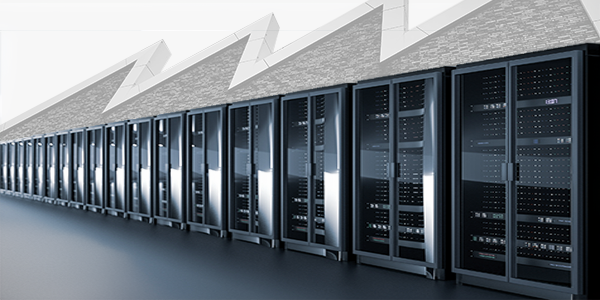
- High-density compute racks reaching 100+ kW create a divergence in power demand known as the Energy Wall.
- Grid connection queues of four to seven years lead to technical obsolescence, where hardware becomes "stale" before the site is even energized.
- Moving integration from the job site to the factory reduces deployment timelines to three quarters and removes high-risk electrical work from the critical path.
Background:
With massive shifts in electricity demand hitting a physical barrier, the real bottleneck for data center operators does not sit with software, but with concrete and kilowatts. According to the International Energy Agency, in 2024, U.S. data centers alone consumed 183 terawatt-hours (TWh), roughly 4% of the nation's total consumption. By 2030, global demand is projected to surpass 945 TWh.
This is a fundamental change in power demand density. While traditional server racks operate at 7-10 kW, modern high-density compute racks are reaching 30-100+ kW. This concentration of power creates a divergence in supply and demand that many now call the Energy Wall.
If the traditional way of building power infrastructure is too slow to climb this wall, how do operators avoid the project-killing delays that turn new facilities into graveyards for outdated technology?
The primary obstacle for infrastructure teams is now velocity. Standard utility planning operates on decade-long timelines for new generation and transmission. In major markets like Northern Virginia and Texas, grid connection queues now stretch between four and seven years.
This "Velocity Gap" leads to a significant and often overlooked financial risk: technical obsolescence.
If a facility takes five years to get power to the data hall, the high-performance hardware waiting inside those racks can become outdated before the site is even energized. For hyperscalers, this means being forced to replace "stale" technology before day one - adding massive unrecoverable costs and further delaying the actual launch of the project. In this environment, whoever secures kilowatts first holds the ultimate strategic advantage.
"Loose-Piece" is falling off
The primary hurdle to faster deployment is the traditional "stick-built" or "loose-piece" construction model. This method requires procuring individual components from multiple vendors and managing a complex, high-risk integration on a construction site. The flaws in this model are now unavoidable:
Timeline risk: Traditional on-site construction is linear and unpredictable, typically taking 18 to 24 months. This timeline is fatally misaligned with the speed of modern computing demands.
Cost and quality risk: On-site construction costs are variable and labor-dependent. With a critical nationwide shortage of skilled labor, quality is often inconsistent.
Safety risk: Integrating high-energy systems in the field exposes workers to arc flash hazards. An arc flash can reach 30,000°F, vaporizing conductors and causing fatal injuries.
Arrive on schedule with factory-first
To overcome these bottlenecks, complexity must move from the construction site to the factory. This philosophy defines the SENS PowerCab®2 (PC2), our fully factory-engineered and assembled DC power system.
The shift to this model started with a client visit.
In late 2023, a hyperscale client was conducting a successful factory witness test at our Colorado facility on a traditional loose-piece system. While the test passed, the client observed the difficulty of configuring the system and maneuvering 300lb batteries in a field-style setup. After seeing a factory-integrated system in production for another customer, the client decided to standardize their global fleet on a packaged power block.
The results validated the move:
The system was ordered as a single part number, eliminating procurement headaches.
It moved all integration complexity into a controlled environment, ensuring higher reliability.
The time from concept to scaled deployment was reduced to just three quarters.
By the time a traditional loose-piece system would have been entering its most dangerous and unpredictable project phase, the integrated PC2 was already commissioned and running. The stats prove our point: SENS solutions are deployed in more than 80% of the hyperscale and colocation data centers in the United States.
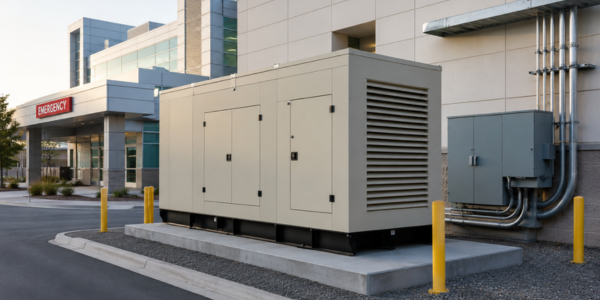
However, the shift to packaged power is not limited to the primary DC bus. Hyperscale reliability also depends on the standby generators that sit behind the fence line. Caterpillar and Cummins have stated that the primary cause of standby generator failure is the starting battery system.
In traditional setups, engine starting is another loose-piece headache. It requires sourcing and installing racks, chargers, disconnects, and heavy-duty lead-acid batteries that require frequent maintenance. This takes up significant space and adds hours of on-site labor.
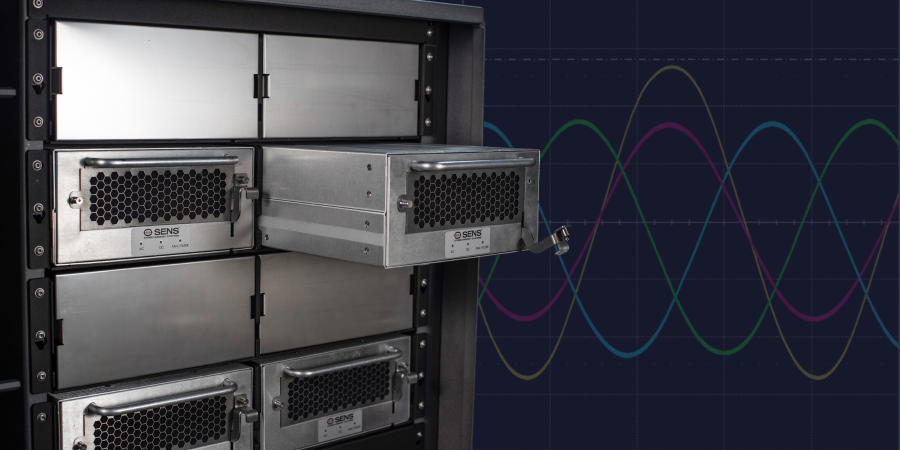
By moving to an integrated system like the SuperTorque® 8R, operators can simplify mission-critical engine starting. The 8R is a single, factory-packaged unit that combines high-performance battery modules, smart chargers, and control electronics into one drop-in rack. The results of this shift simplify specific hyperscale needs: space savings, procurement, reliability and velocity.
The Energy Wall is a physical reality of the modern grid, but your construction model must not be the bottleneck. When velocity is the primary currency, factory integration is the only way to ensure your facility stays ahead of the technology it was built to run.
Critical Power Insights, Delivered
Quarterly updates, technical guidance, and industry news