
• Engine Starting Systems

    SuperTorque 8Z

    NiZn engine starting system

    SuperTorque 8R

    Integrated engine starting with rack/8Z/BBS/BSC/disconnects

    DC Power Systems

    PowerCab2

    24-300VDC, switchgear and industrial power system

    PowerCab

    24/48/120VDC, SCR

    MicroCab

    12/24/48VDC, switchmode

    Battery Chargers

    MicroGenius LE

    12/24VDC, 5-10A

    MicroGenius 2

    24/24VDC, 6-25A

    MicroGenius S2/S4

    12-120VDC, 6-100A

    EnerGenius DC

    120-240VDC, 6-800A, 3PH

    Battery Monitoring & Redundancy

    SC4 Battery Monitoring

    Comprehensive BMS for industrial and telecom applications

    Best Battery Selector

    BBS battery coupler

    BCS-120

    Control & alternator coupler

  • Applications

    Engine Starting

    Reliable DC power for engine starts

    Switchgear Power

    Backup power for critical switchgear

    Industrial DC Power

    Rugged power for industrial sites

    Battery Monitoring

    Battery monitoring systems and accessories

    Industries

    Data Centers

    Backup power infrastructure to maintain uptime

    Oil & Gas

    Power solutions for harsh environments

    Utilities

    Reliable power for grid operators

    Hospitals

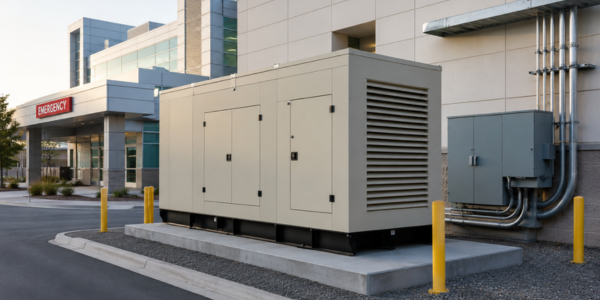
    Backup power for life-critical systems

  • Support

    Technical Service & Support

    Get technical support

    Software Download Center

    Download firmware and software

    Software Revision History

    Updates to SENS software

    Warranties

    Product warranties and repairs

    Resources

    Technical Documents

    User manuals, CAD drawings, certifications, datasheets

    Insights

    Explore SENS power industry insights

    Case Studies

    Real world success stories

    White Papers

    Technical insights and innovations

    Genset Starting Education

    Prevent common genset starting failures

  • About

    About SENS

    Learn about our company

    Manufacturing

    U.S.-based manufacturing and scalable production

    Quality

    ISO 9001, worst-case design, codes & standards

    Partners

    Find a regional representative

    Company Updates

    News

    Company news and announcements

    Events

    Upcoming conferences and exhibitions

    Careers

    Working with SENS and open positions

Engine Starting Systems

SuperTorque 8Z

NiZn engine starting system

SuperTorque 8R

Integrated engine starting with rack/8Z/BBS/BSC/disconnects

DC Power Systems

PowerCab2

24-300VDC, switchgear and industrial power system

PowerCab

24/48/120VDC, SCR

MicroCab

12/24/48VDC, switchmode

Battery Chargers

MicroGenius LE

12/24VDC, 5-10A

MicroGenius 2

24/24VDC, 6-25A

MicroGenius S2/S4

12-120VDC, 6-100A

EnerGenius DC

120-240VDC, 6-800A, 3PH

Battery Monitoring & Redundancy

SC4 Battery Monitoring

Comprehensive BMS for industrial and telecom applications

Best Battery Selector

BBS battery coupler

BCS-120

Control & alternator coupler

Applications

Engine Starting

Reliable DC power for engine starts

Switchgear Power

Backup power for critical switchgear

Industrial DC Power

Rugged power for industrial sites

Battery Monitoring

Battery monitoring systems and accessories

Industries

Data Centers

Backup power infrastructure to maintain uptime

Oil & Gas

Power solutions for harsh environments

Utilities

Reliable power for grid operators

Hospitals

Backup power for life-critical systems

Featured Articles

NFPA110

Article

Healthcare Emergency Power: Reliability, Compliance & Risk

Switchmode_Article_Image

Article

What Switchmode Technology can do for Utilities

Support

Technical Service & Support

Get technical support

Software Download Center

Download firmware and software

Software Revision History

Updates to SENS software

Warranties

Product warranties and repairs

Resources

Technical Documents

User manuals, CAD drawings, certifications, datasheets

Insights

Explore SENS power industry insights

Case Studies

Real world success stories

White Papers

Technical insights and innovations

Genset Starting Education

Prevent common genset starting failures

Featured Content

Girtz_CaseStudy_WebsiteBanner

Case Study

How Girtz Industries Improved Their Engine Starting Tests

Mission_Critical_Power_2030_OnsiteGeneration

White Paper

What will the Mission for Critical Power Look like in 2030?

About

About SENS

Learn about our company

Manufacturing

U.S.-based manufacturing and scalable production

Quality

ISO 9001, worst-case design, codes & standards

Partners

Find a regional representative

Company Updates

News

Company news and announcements

Events

Upcoming conferences and exhibitions

Careers

Working with SENS and open positions

Latest News

Ribbon Cutting Cropped

NEWS

SENS Celebrates Colorado Expansion with Ribbon Cutting at New Longmont Manufacturing Facility

false

Best Battery Selector BBS-800, BBS-1600 & BBS-4800

View Datasheet
Applications: Critical engine starting and electrical switchgear environments

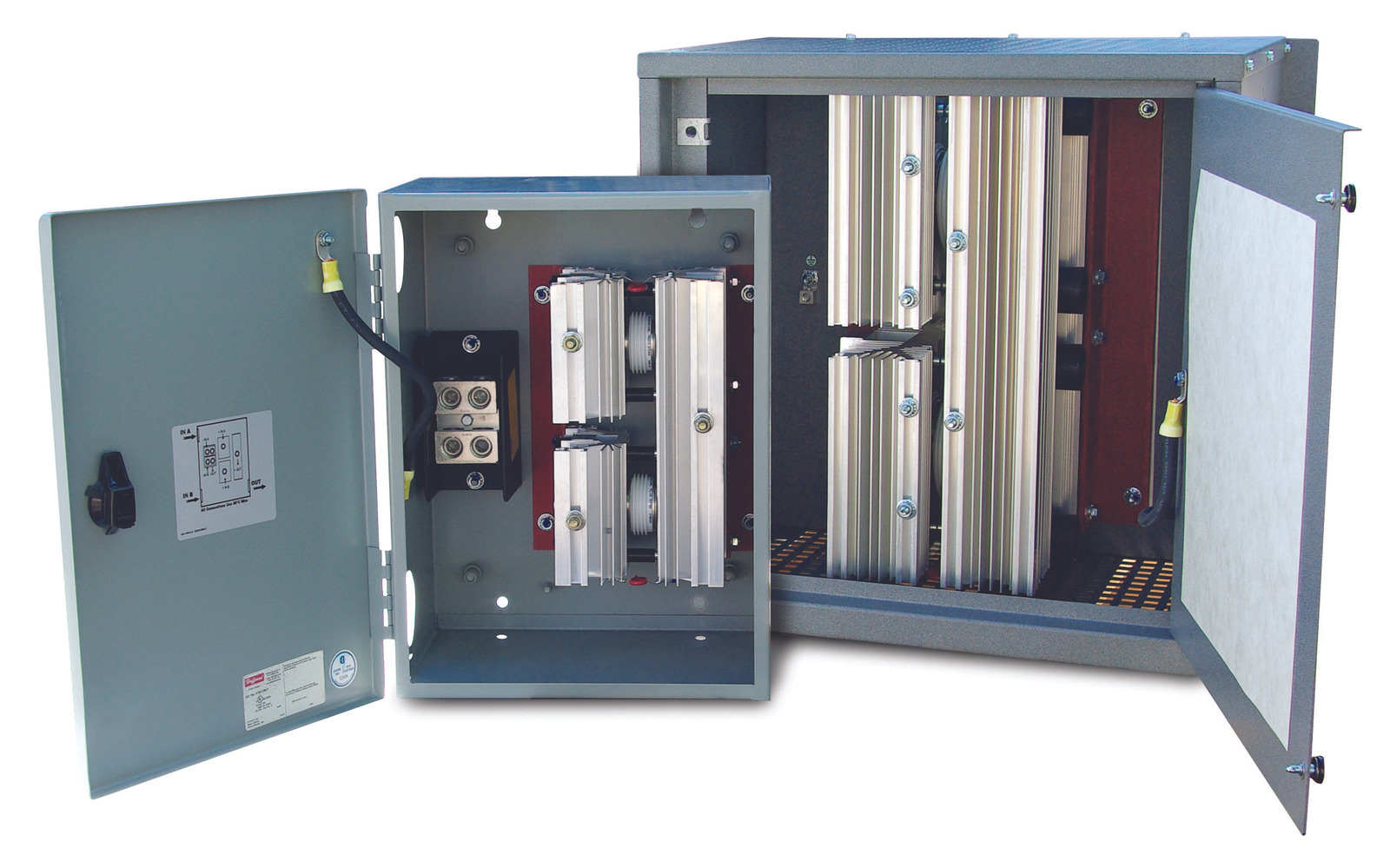
SENS Best Battery Selectors (BBS) deliver power from two different batteries to one or two loads in environments requiring very high availability. In normal operation, current flows through the BBS from both batteries.

But, if one battery is weak or has failed, power automatically flows to the load from the other battery. The best battery selector prevents parallel connection of two batteries so that a bad battery does not cause the failure of the other one.

Automatically cross-couples two batteries to one or multiple loads for highest DC system reliability.

  • Delivers current to load from either one or both batteries
  • Fully automatic
  • Prevents a bad battery from draining the second battery
  • De-rated components assure reliable operation
  • BBS-800: 1250 amps peak current
  • BBS-1600: 2500 amps peak current
  • BBS-4800: 6400 amps peak current
  • IBC seismically certified

Applications: Critical engine starting and electrical switchgear environments

SENS Best Battery Selectors (BBS) deliver power from two different batteries to one or two loads in environments requiring very high availability. In normal operation, current flows through the BBS from both batteries. But, if one battery is weak or has failed, power automatically flows to the load from the other battery. The best battery selector prevents parallel connection of two batteries so that a bad battery does not cause the failure of the other one.


Three models are available offering 1250 amp, 2500 amp and 6400 amp peak current ratings to suit a wide range of loads in applications ranging from 12 volts nominal to 120 volts nominal. For continuous loads, the BBS-800, BBS-1600 and BBS-4800 will support 45 Amps, 50 Amps and 150 Amps respectively of continuous current at any voltage up to 120 volts.


Both SENS BBS models are fully solid state, without any moving parts or control electronics. De-rated diodes, transient suppressors, and oversized head sinks assure reliable operation.


All SENS BBS models are IBC seismically certified to an Sds value of 2.50g.

  • Primary Product ID BBS
  • Associated Product IDs BBS-800 BBS-1600 BBS-1600E BBS-4800 BBS-4800E

Detailed Specs

  • 1. COMPONENTS
  • 2. STANDARDS
  • 3. PERFORMANCE
  • 4. IMPACT ON SYSTEM BATTERY
  • 5. PROTECTION

 2.03 COMPONENTS

F.    Best Battery Selector:  Provide best battery selector (BBS) to isolate two independent starting batteries while enabling either or both to deliver cranking current. 

2. Standards

BBS shall meet IBC 2006 seismic standard and carry IBC compliance label.

3. Performance:

BBS shall be all solid-state, and rated for the maximum continuous crank duration stated in the latest revision of NFPA 110, and in no case less than 45 seconds continuous. Each power device of the BBS shall be rated to carry the published worst-case current demanded by engine’s starter motor(s) at breakaway, and during the required crank duration.

4. Impact on system battery

Supplier shall compensate for worst-case voltage drop across BBS devices by increasing battery capacity to ensure that BBS output voltage during breakaway and cranking does not drop below the cranking battery standard values specified in EGSA 100B or the voltage needed to reliably start the engine, whichever is higher.

5. Protection

BBS shall include transient protection device(s) to protect BBS against back-EMF generated in the starting system.

frequently Asked Questions

1. What is a BBS?

A Best Battery Selector (BBS) is a device that is increasingly used in engine starting environments that demand extremely high reliability. Many specifications now call for two sets of batteries to be coupled to a single engine. If one set of batteries is weak or dead, the other set of batteries can still start the engine.

A BBS couples these two sets of batteries to a single engine, automatically using whatever current is available from both battery sets to start the engine, but at the same time isolating the batteries so that one bad battery set does not bring the other one down.


2. Is the BBS designed for negative or positive ground systems?

The BBS is designed for Negative ground systems. It may also be applied in floating systems when used in the positive lead. It should never be applied in Positive ground systems.

3. If I use your BBS, can I use one battery charger to charge both sets of batteries?

No. Each set of batteries needs its own charger, so that it can be independent and isolated from the other set of batteries. If only one charger is used, this defeats the isolation because the charger would be connecting the two batteries together.

4. Why are the diodes on heatsinks?

The diodes can carry very large peak currents during worst-case conditions in a motor cranking cycle. The heatsinks protect the diodes from overheating when they’re carrying these large cranking currents.

5. Why is there a wire connected from the chassis to the door?

This is a ground strap. It is a safety device to ensure that the hinged door is properly grounded.

6. Why doesn’t your BBS have any breakers or fuses?

The BBS electrical design is very simple, because it contains diodes that are passive devices. Breakers and fuses are not needed in this type of product, and this also means there’s no risk of decreased reliability due to false trips.

7. What size wires can I connect to the heatsinks?

The SENS BBS-4800 has conduit holes and adequate space on both sides of the heatsinks for bending radius for up to 350MCM cables, or double 4/0AWG cables. The SENS BBS-800 and BBS-1600 have conduit holes and adequate space and bending radius for up to 4/0 AWG cables.

8. What are the maintenance requirements for the BBS?

If properly installed, the BBS requires no maintenance. In environments that are subject to high vibration, corrosion, or other elements that may degrade electrical equipment, it’s recommended to periodically check the integrity of the DC cable connections at the heatsinks.

9. What if I have two alternators in my system?

This is an acceptable system design. In the case of two alternators, connect “Alternator A” to “Battery A” and “Alternator B” to “Battery B”. This will maintain isolation between the two batteries.

10. How does a BBS work?

A properly engineered Best Battery Selector (“BBS”) consists of two large diodes, specialized heat sinks, and voltage surge protection assembled and mounted in a metal enclosure. During normal operation with two good sets of batteries, the diodes are “on” and they deliver the cranking current to the starters. When one set of batteries gets weak or fails, its diode is “off” because it is no longer delivering current to the starter, but it is blocking current supplied by the good battery from flowing in the reverse direction into the bad battery.

11. Why should I use a BBS?

For engine starting systems that demand high reliability, the BBS does two things:
(1) Provides efficient and reliable coupling of good batteries
(2) Allows the system to keep working if one battery fails because one of the diodes will isolate the bad battery

12. How do I know what BBS to use?

SENS offers three sizes of BBS: The BBS-800 is rated for 30-second rolling current up to 1,600 Amps at -18C and 1,075 Amps at +50C, the BBS-1600 is rated for 30-second rolling current up to 3,200 Amps at -18C and 2,150 Amps at +50C, and the BBS-4800 up to 7,150 Amps at -18C and 4,950 Amps at +50C. Select a BBS with a current rating high enough to handle the cranking current drawn by your starters.

13. Why aren’t there any fans blowing air on the heatsinks?

Fans are not needed, because the heatsinks have been sized large enough for convection cooling. This is an added reliability feature because there are no fans to fail.

14. Does a BBS need to be UL listed?

No. Like all SENS products, the BBS-800, BBS-1600 and BBS-4800 are designed for safety. The common types of UL listings for battery chargers (UL 1012, UL 1236) are not applicable, and there is no UL standard dedicated to BBS products.

15. Why aren’t there any cables or terminals on the heatsinks? Where do I connect our DC cables?

Because system requirements vary widely, SENS BBS products provide a wide range of options for the installer to connect DC cables. A common way to install a BBS is to use 4/0AWG or similar flexible cables, terminated with either 1-hole or 2-hole ring lugs, and the lugs are bolted to the BBS heatsinks using the locking hardware that’s provided with the BBS. Multiple DC cables may be installed along the heatsink channels to increase current carrying capability.

16. What’s the voltage rating on your BBS?

SENS BBS products are rated up to 120VDC nominal. This means that the BBS may be used for systems with nominal battery voltages including 12V, 24V, 32V, 48V, 120V and other special voltages up to 120V. The 120VDC nominal rating is not a maximum voltage; actual 120VDC battery system voltages may be as high as 148VDC and this is acceptable for SENS BBS products.

17. If I use your BBS, how do I connect my alternator into the system?

If an alternator is used, it should be connected to only one set of batteries, not both. This will maintain isolation between the two batteries.

have questions or need help?

The SENS team is here to help. If you have questions or need help, reach out and start a conversation.