false

PowerCab2 DC UPS System

View Datasheet

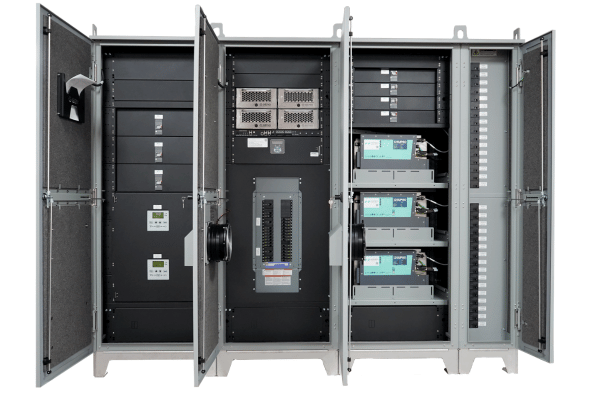
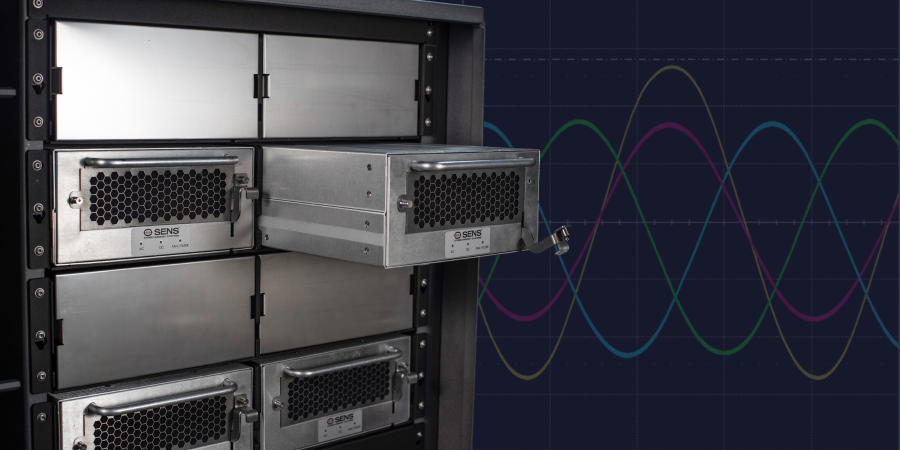
The SENS PowerCab™2 is designed for mission critical switchgear, utility, and power generation applications. It packages energy storage, power conversion, distribution, and monitoring to your specific application requirements.

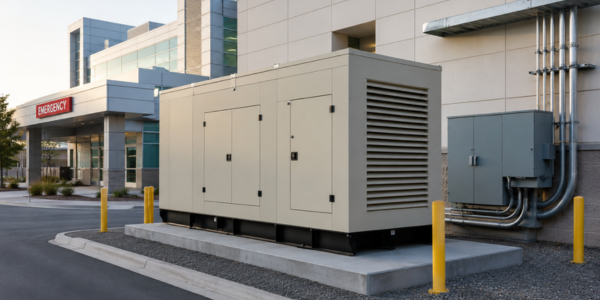
The PowerCab™2 ships fully configured and assembled and cuts DC system specification complexity, installation time, cost, and risk. It is suitable for indoor and outdoor applications for any load requiring non-stop DC power and is available in 24-240+ volt DC configurations.

UL Listed for installations across the US and Canada.

Options include: expansion cabinets, load centers, electrical distribution, low-voltage disconnects, battery monitoring, inverters, and transfer switches.

Configurable Factory-packaged DC UPS Non-Stop Power

  • Factory-packaged – configured, designed, manufactured, assembled and tested from the SENS Colorado factory.
  • Includes power conversion, energy storage, distribution, monitoring & more.
  • Options for up to 32 two-pole breakers in a single 15” cabinet with SENS.
  • Optional high AC and DC interrupt breakers also available.
  • Multiple battery chemistries with choice of Sodium Nickel Chloride (Salt Batteries from FZSoNick), Nickel-Zinc (ZincFive), or VRLA.
  • Cabinet ingress protection ratings: NEMA 1 or NEMA 3R.
  • Compact, efficient, hardened switch-mode power conversion for industrial energy storage applications.
  • Tailored to your specific design and application requirements.

PowerCab™2 DC UPS System Applications

  • Mission Critical DC Power for Switchgear
  • Utilities
  • Power Generation
  • Industrial Plants

Frequently Asked Questions

1. What is included with the PowerCab2?
  • Standard: energy storage/batteries, power conversion/chargers, electrical distribution and load centers, HMI interface, AC/DC breakers
  • Optional: battery monitoring, high interrupt breakers, shunt-trip breakers, bus bars/bulk termination, wire marking (PIP compliance), redundancy, inverters, and transfer switches.
2. Can I order the PowerCab2 with one part number?
  • Yes, the PowerCab2 can be ordered with a single part number, while incorporating the application specifics and customizing the battery choice and cabinet configurations.
  • A piecemeal DC system requires installers to assemble racks, mount and wire battery cells, size protective devices, run conduit, and integrate chargers and panels—often with parts from multiple sources. In contrast, the UL-Listed SENS PowerCab2 is fully engineered, factory-assembled in an ISO9001-2015 facility, and fully tested before shipment. It arrives ready to install, eliminating guesswork, missing parts, and extra labor. This shortens installation time, lowers cost, and provides a predictable in-service date.
3. Is it suitable for indoor and outdoor applications?
  • Yes, the PowerCab2 is available in NEMA 1 for indoor applications and NEMA 3R for outdoor applications.
  • Salt batteries or high temperature VRLA batteries are recommended for outdoor applications.
4. What makes the PowerCab2 so reliable?
  • It is specifically engineered for hardened industrial applications like utility, oil and gas, and other mission critical applications.
  • Every component is factory assembled, tested, and arrives on-site ready to be wired, commissioned and quickly put into service.
  • Our state-of-the-art silicon-carbide switchmode power conversion technology offers the most robust rectification in the smallest footprint matching the demand for any customer.
5. Why is PowerCab2 safer than other systems?
  • The biggest safety risk in DC systems is lifting and handling batteries. In the PowerCab2, batteries are factory-installed, wired, and secured, eliminating hazardous on-site lifting. The entire cabinet can be positioned with a forklift, pallet jack, or crane. 
  • PowerCab2 uses dead-front panels to keep all internal components touch-safe when the doors are open, preventing accidental contact with live terminals. Most “build-your-own” systems offer only minimal or no protective covers.
  • The charger, battery, distribution panel, and cabinet are all UL-listed—something many assembled-on-site systems lack. 
6. Is it UL listed?

Yes, the PowerCab2 is UL/C-UL listed for installations across the US and Canada.

7. Is it seismic certified?

The PowerCab2 is designed to all North American and IEEE seismic requirements including OSHPD. Testing to be completed in Q1 2026.

8. What are the advantages of a pre-built DC power system vs. assembling components on-site?

A piecemeal DC system requires installers to assemble racks, mount and wire battery cells, size protective devices, run conduit, and integrate chargers and panels—often with parts from multiple sources. In contrast, the UL-Listed SENS PowerCab2 is fully engineered, factory-assembled in an ISO9001-2015 facility, and fully tested before shipment. It arrives ready to install, eliminating guesswork, missing parts, and extra labor. This shortens installation time, lowers cost, and provides a predictable in-service date. 

9. Does the PowerCab2 cost more than buying the battery, charger and distribution panel separately?

Component cost is only a small part of total project expense. Engineering, purchasing, installation, on-site testing, approvals, and after-sale support add significantly. Many users also report smoother AHJ approvals with a UL-Listed, factory-built cabinet versus an on-site, a-la-carte system. Because it reduces engineering and installation labor, PowerCab2 often delivers the lowest total cost compared to “build-your-own” DC systems. 

10. What is the rating of the DC load breakers?

PowerCab2’s battery and DC load breakers are 2-pole UL 489 listed at 14,000 AIC (amps interrupting current) at 125 volts DC. This is substantially higher than any other compact circuit breaker on the market. 

11. What battery chemistries are available?
  • Standard: your choice of Sodium Metal Chloride (Salt Batteries), Nickel-Zinc, front terminal VRLA, high temperature TPPL VRLA, AGM. 
  • SENS can integrate other chemistries as specified, including Lithium Iron Titanate (LTO). 
12. What makes Salt batteries a good fit for the PowerCab2 system?
  • SMC batteries are ideal for low-rate loads (3–12 hours), extreme temperatures, high safety requirements, and long, maintenance-free life. 
  • Sodium-Metal-Chloride chemistry delivers long life even in high heat, a compact footprint, and built-in intelligence through per-module battery management. 
  • Salt batteries require no HVAC and outperform many technologies in both hot and cold environments, operating continuously from –20°C to +60°C with IP55 protection. 
13. What makes VRLA batteries a good fit for the PowerCab2 system?
  • VRLA is an industry standard economical battery with performance that matches many indoor switchgear application load profiles.
  • The PowerCab2 can be configured with parallel VRLA battery strings for N+1 brute force reliability. 
  • Front terminal batteries enable easy operation, maintenance and fast change-out if needed. 
14. When should I choose Nickle-zinc (NiZn) batteries for my PowerCab2 system?
  • Choose NiZn when you need sustainability, wide temperature tolerance, and long life. They are ideal for very high-rate applications with 2-minute to 1-hour discharge times. 
  • They contain no hazardous materials, are air-shippable, meet UL-1989, UL-1973, and CSA 22.2 standards, and show no thermal runaway in UL-9540A testing. 
  • PowerCab2 can use parallel NiZn strings for higher ampacity, capacity, or N+1 redundancy. 
    NiZn offers >15-year service life and wide operating ranges: –20°C to 50°C discharge, 0°C to 40°C charge.
15. When should I choose Lithium Titanate Oxide (LTO) batteries for my PowerCab2 system?

Choose LTO if you need an extremely high-rate capable battery in the smallest footprint, wide temperature range, and long calendar life. 

16. How much clearance is necessary around PowerCab2?

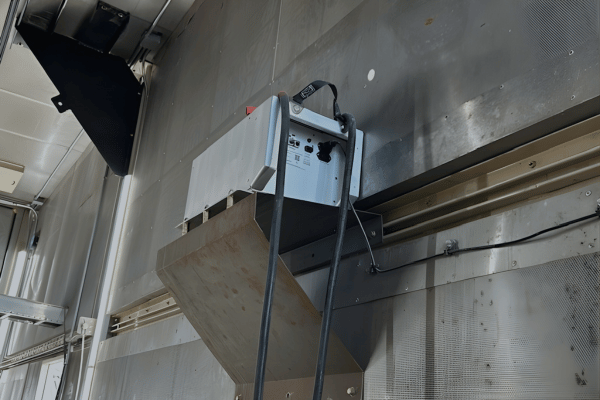
No clearance is required in back or on the sides. PowerCab2 employs thermostatically controlled forced-air cooling, entering through the front door and exiting the top rear of the cabinet. Because of this, the sides can be mounted essentially flush with walls or other equipment. It is recommended to leave a few inches beyond the exhaust hood of the cabinet. 

have questions or need help?

The SENS team is here to help. If you have questions or need help, reach out and start a conversation.