 SENS
SENS
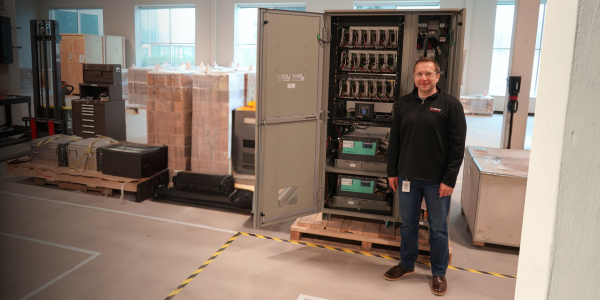
Our CEO, Igor Stamenkovic, sat down with citybiz to share his perspective on the forces reshaping the critical power industry and what organizations need to do to stay ahead.
Igor Stamenkovic is the Chief Executive Officer of Stored Energy Systems (SENS), a leader in integrated DC power and engine-starting systems for mission-critical infrastructure. He joined SENS from Eaton, where he led global electrical services and systems businesses, bringing deep experience in scaling industrial organizations and advancing power infrastructure technologies.
You’ve stepped into leadership at SENS at a pivotal time for the power industry. What drew you to the company, and what’s your vision from here?
We’re at the center of a fundamental shift in how power systems are designed and used. Reliable power is no longer just a requirement, it’s becoming a competitive advantage for data centers, utilities, and industrial environments.
What drew me to SENS was its combination of proven and considerable scale with a clear systems approach. The company already supports more than 80% of data centers in North America, has grown its team by more than 30% year-over-year for the past five years, and has a reputation for engineering complete, integrated solutions that truly bring value to clients.
SENS designs and manufactures integrated DC power and engine-starting systems for mission-critical facilities that ensure continuous operation of generators, switchgear, gas turbines and control systems.
SENS’s experts understand customer applications and engineers integrated solutions that solve real operational challenges. That’s a very different mindset compared to traditional engineering components manufacturers, and it’s one that I think aligns with the demands of mission-critical power today.
My focus here is to further scale that capability. The opportunity now is to build on SENS’ existing momentum and expand our systems approach, positioning SENS as the backbone of always-on power infrastructure.
SENS often describes itself as a “systems company.” What does that mean in practice for your customers?
It means moving away from field-assembled, multi-vendor solutions toward fully integrated systems. It also means solving customers’ end-to-end problems instead of offering standalone widgets.
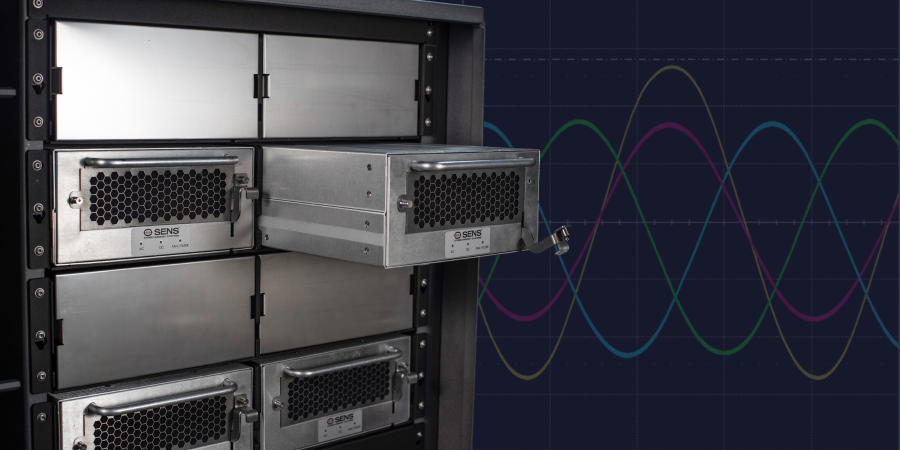
We engineer, assemble, and test systems in the factory, bringing together batteries, chargers and other power electronics, controls, and power distribution into a single, validated module. That reduces field variability, shortens deployment timelines, and simplifies specification and procurement.
It also creates clear accountability. Instead of coordinating multiple vendors, customers work with a single partner responsible for system performance.
For engineers, project managers, and operators, that translates into lower risk and more predictable outcomes. Much of this innovation came directly from listening to customers who were struggling with multi-vendor coordination, excessive fault points, and ongoing maintenance complexity. As a result, we developed factory-assembled, fully tested modular systems that streamline integration and significantly reduce installation time.
SENS has been making the case that how critical power systems are used is shifting from occasional backup to much more frequent, operational use. What’s driving that change?
We’re seeing multiple forces come together: Demand is rising quickly, driven by AI workloads, data center expansion, electrification, and industrial expansion particularly in the US. At the same time, grid constraints are surfacing, whether due to aging infrastructure, insufficient central power generation, or long lead times for critical equipment like transformers and gas turbines.
The result is that power systems are being used more often and under more dynamic conditions. Facilities are no longer just preparing for outages, they’re actively managing energy availability, cost, and grid interaction.
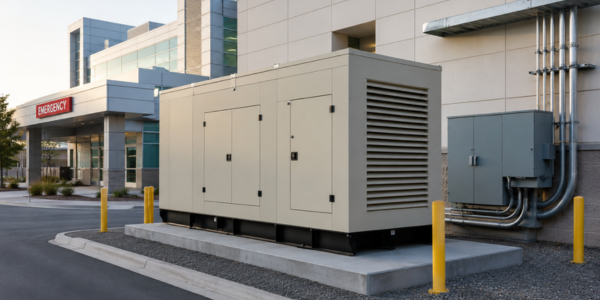
That shift changes the role of on-site power infrastructure from mostly dormant critical backup to mostly active power generation. As a result, on-site power infrastructure is much larger in capacity and much more complex to operate reliably and cost-effectively.
When critical power becomes more operational, what does that mean for data centers and industrial facilities?
On-site power infrastructure becomes part of daily operations. You’re seeing more frequent generator starts, tighter coordination between systems, and increased attention from both engineering and finance teams.
From a technical standpoint, batteries and power electronics transition from float-based, low-cycle use cases to assets that cycle regularly and must perform consistently. That introduces new requirements around lifecycle, recharge rates, and system integration.
At the business level, energy volatility is now a P&L issue and a potential business risk. Organizations are thinking more strategically about how their power systems perform rather than only whether they work in an emergency.
SENS is experiencing great growth today, but has also built a strong reputation over decades. What do you attribute this to?
Reliability today is about consistent execution at scale.
We’ve built a strong foundation over decades, and our systems are deployed across data centers, utilities, and critical infrastructure throughout North America. But what matters just as much now is our ability to deliver reliably in a challenging environment.
That’s why we’ve invested heavily in our manufacturing footprint, supplier network, and customer support capabilities. We design and manufacture in the U.S., with facilities in Colorado and Pennsylvania, which give us tighter control over quality and lead times.
We’ve grown significantly over the past few years, with employee growth that has allowed us to bring in some of the best and brightest talent in the industry. New expertise and new perspectives bring us the ability to execute at a higher level.
We’re also expanding our network of sales and channel partners to support growing demand. Being a reliable partner means solving problems at the speed and scale customers require.
The goal is to scale without losing the engineering focus and customer responsiveness that define SENS.
What role does innovation play in SENS’s growth strategy?
Innovation at SENS is closely tied to customer application needs.
Many of our solutions originate from direct collaboration with customers. We identify pain points in the field and develop integrated solutions that address them. From there, we productize those innovations so they can be deployed consistently and at scale.
We operate in environments that are evolving quickly: AI-driven data centers, grid modernization, and industrial electrification create ever-changing system requirements at a rapid pace. That requires strong engineering capability, deep customer intimacy and the ability to respond quickly.
We think of ourselves as a technology-driven manufacturer, combining innovation with repeatability and scale.
What do you believe critical power systems must be designed to do by 2030?
They need to be designed for continuous, repeatable operation, not just emergency use.
That means supporting higher cycle counts, faster recharge capability, and tighter integration across systems. It also means improving power density, reducing footprint, and simplifying deployment.
The expectations for critical power are increasing. Systems must perform consistently under more demanding conditions, and they must be easier to implement at scale.
That’s the direction the industry is moving, and it’s the direction we’re building toward at SENS.
Critical Power Insights, Delivered
Quarterly updates, technical guidance, and industry news