
 Bill Kaewert
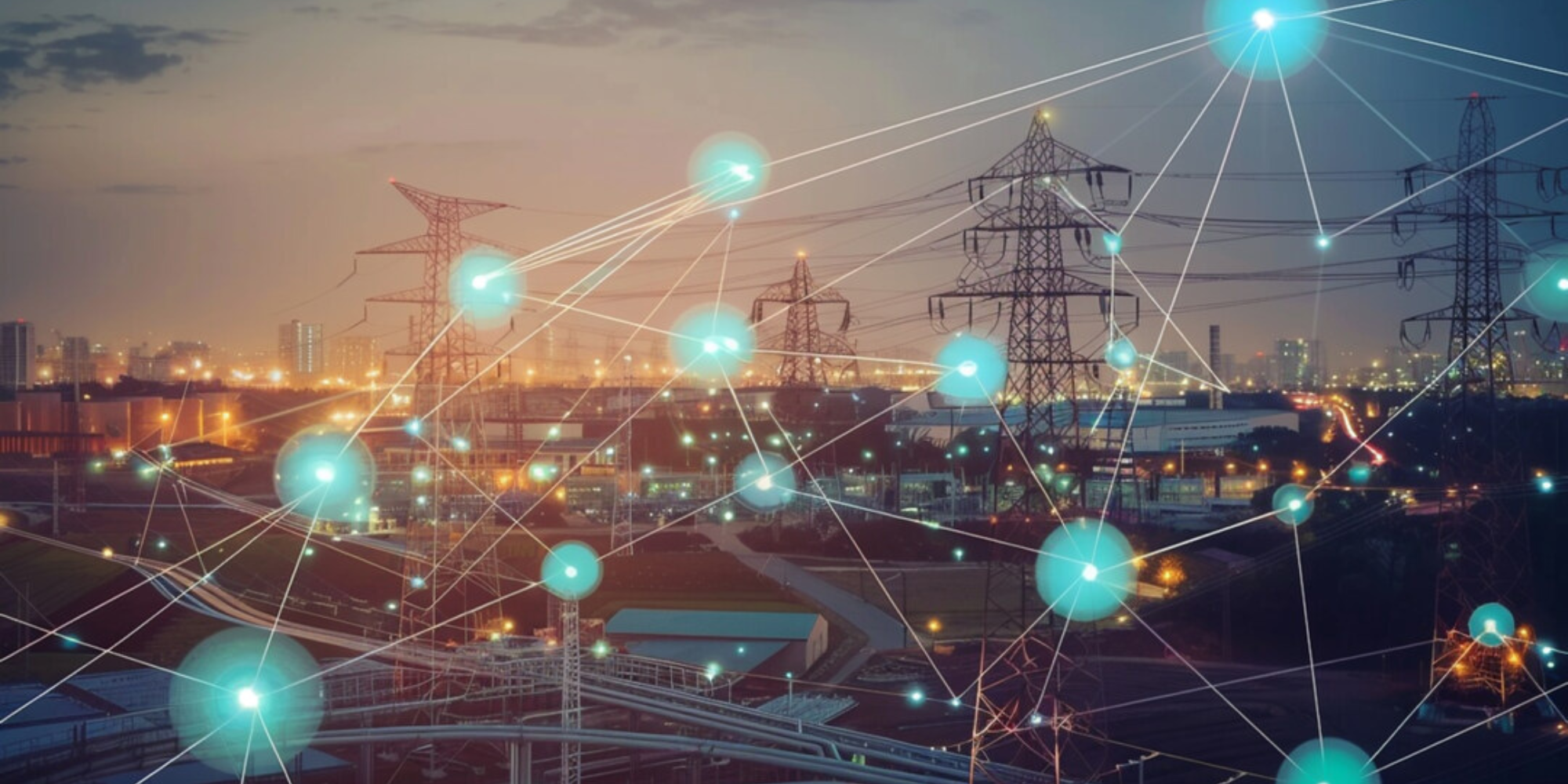
Our outdated view of power grids no longer reflects the complex realities of modern power generation.
In the wake of the April 28 outage that completely shut down Spain and Portugal for several hours, the internet has been flooded with “answers” - long before the official investigation provides us with full details. I’m not going to pretend I know what went wrong in Iberia, nor to prescribe a solution to their specific local problems.
However, as someone who’s spent his life studying power systems and working to improve grid resilience, it has gotten me thinking. There is a much greater problem that most of the proposed solutions won’t really solve: the way we think about grids is outdated and no longer matches the realities of modern power generation. Even worse, following these outdated approaches will actually increase the risk of further blackouts.
Is inertia the real fix?
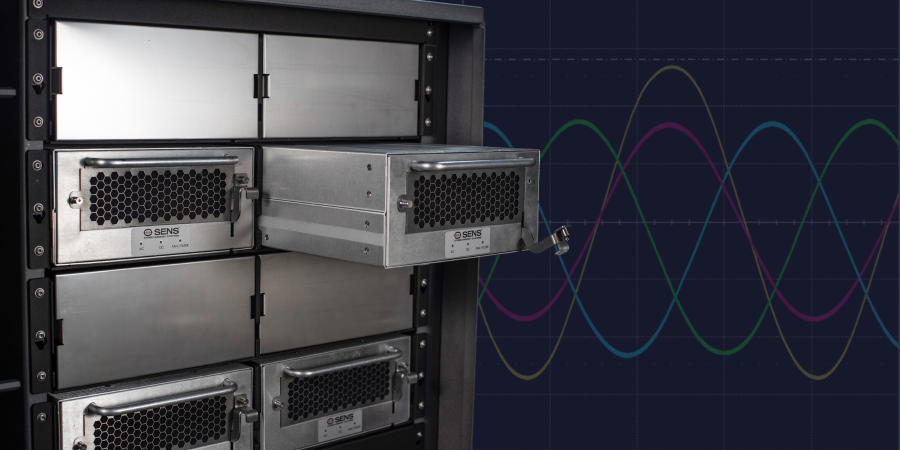
So, what’s been proposed for Iberia? In a nutshell, it all comes down to inertia. This is truly the energy buzzword for 2025. Inertia refers to the stored kinetic energy in large rotating masses like generators. It provides resistance to changes in grid frequency, keeping generators spinning and frequency steady when a disturbance occurs. Renewable sources like wind and solar don’t have inherent inertia, so as these sources make up more of the energy mix, maintaining stable frequency becomes challenging.
Specific proposals include:
- Adding more physical inertia to the grid, either with standalone synchronous converters or by maintaining the spinning mass from retiring power plants (synchronous condensers).
- Requiring that solar and wind farms use grid-forming inverters to provide synthetic inertia.
- Further building out utility-scale battery storage (another form of synthetic inertia).
- Expanding transmission capacity and cross-border interconnections (providing access to inertia from farther away).
- Expanding mechanisms like capacity markets, which encourage investment in traditional generation (e.g. gas peaker plants).
It’s distracting us…
While some of these measures might indeed improve stability, they share one fatal flaw: they all just put lipstick on the centralized grid pig. Centralized systems are vulnerable, with too many potential single points of failure.
Actually, one of the key tenets of the energy transition is decentralization. Yet for the most part, we’ve just taken the old, centralized model - big power plants located near population centers, tied together with lots of transmission lines - and replaced it with a new centralized model. Even worse, big solar and wind farms are usually located far from population centers, requiring even more transmission lines. Adding more big renewable farms and utility-scale battery storage and repurposing old coal plants located somewhere else as synchronous condensers, will only increase the reliance on long-distance transmission.
…from a greater problem
And transmission infrastructure is particularly vulnerable, subject to ice storms and other severe weather, deliberate attack and other problems. A large-scale grid attack does not necessarily mean international cybercrime; it could be as simple as someone shooting out tower insulators or physically damaging tower legs. A decade ago, a substation in California was attacked and heavily damaged by gunmen. FERC chair Jon Wellinghoff told the Wall Street Journal that a similar attack on a very small number of substations in the US would black out the entire country for more than a year.
Design for resilience
Since these risks are well understood, shouldn’t we be designing our power systems such that the loss of one or more parts of the system has only localized effect, rather than wide scale? The answer is yes! In the recent blackout, what appears to have been a local problem in part of Spain took down power to the entire peninsula in a matter of seconds. That doesn't have to happen.
The solution to such vulnerability was modeled decades ago in the decentralized architecture of ARPANET (the foundation of the modern internet). To overcome the vulnerability of military command and control systems against nuclear attack, DARPA (Defense Advanced Research Projects Agency) created packet switching to replace point-to-point communication links. Messages arrive at their destination regardless of destruction or failure of one or more intermediate nodes.
For electricity, this would require reformation of the power grid into a series of microgrids, each self-contained with adequate generation, storage and inertia to support its own loads. A single microgrid could either synchronize to and operate in conjunction with the wider group of microgrids or operate as an island.
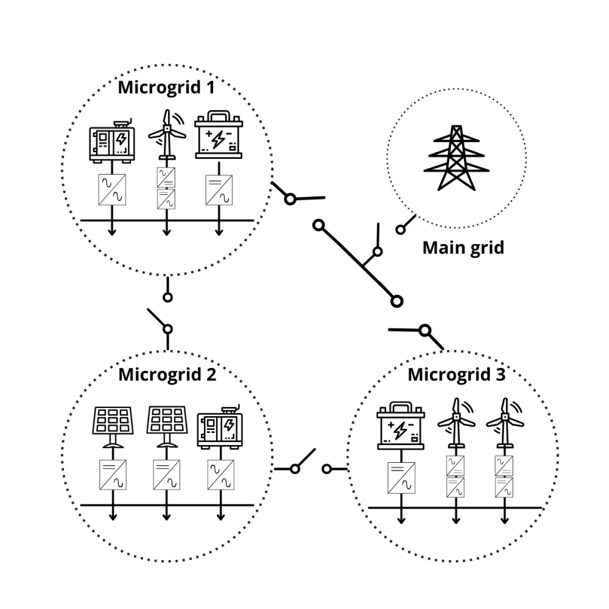
Failures could then be more easily contained to a small area. Furthermore, since black start is much simpler at small scale, the affected area that does lose power should be able to recover faster once the problem is corrected.
The transformation has already begun
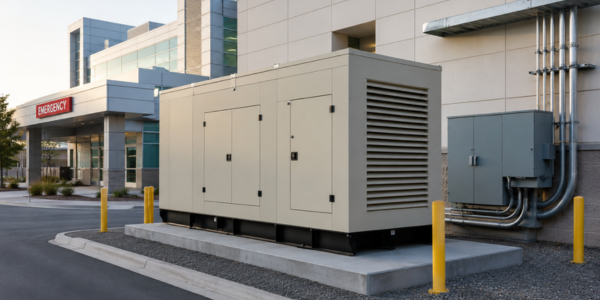
In fact, the transformation to what I’m proposing is already happening in universities, hospitals, commercial and industrial facilities including data centers, and even private homes. It is likely that public investment will be wasted trying to bolster centralized grids, while the real progress toward resilient power will be made by informed private citizens and industry investing in their own microgrids. They know they can’t rely on vulnerable centralized power.
Professional engineering organizations like IEEE Power & Energy Society are already advocating for this change. It’s time we as an industry step off the bandwagon of centralized power, banking on large-scale renewables and wide-spread inertia tied together by long-distance transmission. True resilience will not be achieved by making the system even bigger and more complex; it lies in simplicity, and in small-scale local self-sufficiency.