
3 min read
How to Invent the (Better) Wheel: Solutions for Non-Stop Reliable Power for Industrial Applications
 SENS
:
Jul 23, 2026
SENS
:
Jul 23, 2026
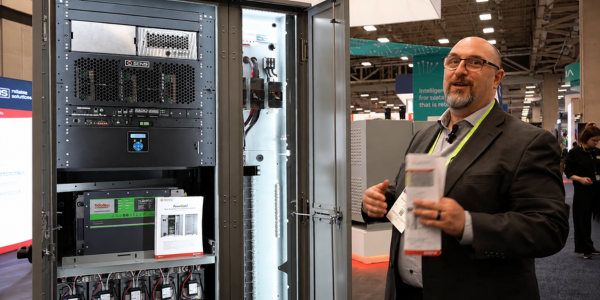
Why reinvent the wheel anew each time, when you can build a better one that actually lasts? We designed the PowerCab®2 to give engineers a solution that drops straight into a substation, cutting out the typical friction of sourcing chargers and cabinets from different vendors.
We sat down with Richard Hutchins, our Systems & Compliance Engineer, to talk through what's inside the PowerCab2, from silicon carbide rectifier technology to flexible battery options for DC power systems.
Q: Richard, why move away from the traditional "loose-piece" approach where chargers and batteries are sourced separately?
When you source separate components, you’re essentially volunteering to be the systems integrator on a job site. With the PowerCab2 you have a single factory deliverable unit with one single part number, where the charger, the batteries, and the DC distribution panel are fully mounted, wired, and tested inside our ISO 9001 controlled factory.
This guarantees quality and means there is virtually no commissioning required in the field. It simply eliminates the headaches and risks of wiring those disparate systems together.
Q: What components are included in the PowerCab2?
The PowerCab2 comes standard with your choice of several battery types (Sodium Metal Chloride, front terminal VRLA, high temperature TPPL VRLA, AGM, or other chemistries as specified, including Lithium Iron Titanate) and power conversion based on our rugged, compact MicroGenius 2 technology. It also includes electrical distribution and load centers, an HMI interface and AC/DC breakers, all housed in a NEMA 1 or NEMA 3R cabinet.
Optionally, you can add battery monitoring, high interrupt breakers, shunt-trip breakers, bus bars/bulk termination, wire marking (PIP compliance), redundancy, inverters, and transfer switches. The goal is to provide everything you need in one contained package.
Q: For utility engineers, compliance is often the biggest hurdle. How does the PowerCab2 address NERC requirements?
This design anticipates it. By incorporating redundant switch-mode rectifiers, advanced battery monitoring, and the DC breaker panel into one self-contained box, we handle NERC TPL-001-5 and NERC PRC-005 compliance issues directly. Everything you need for reliability and reporting is already integrated into the system.
Q: You mention switch-mode rectifiers. How does the PowerCab2’s rectifier technology compare to older IGBT or SCR designs?
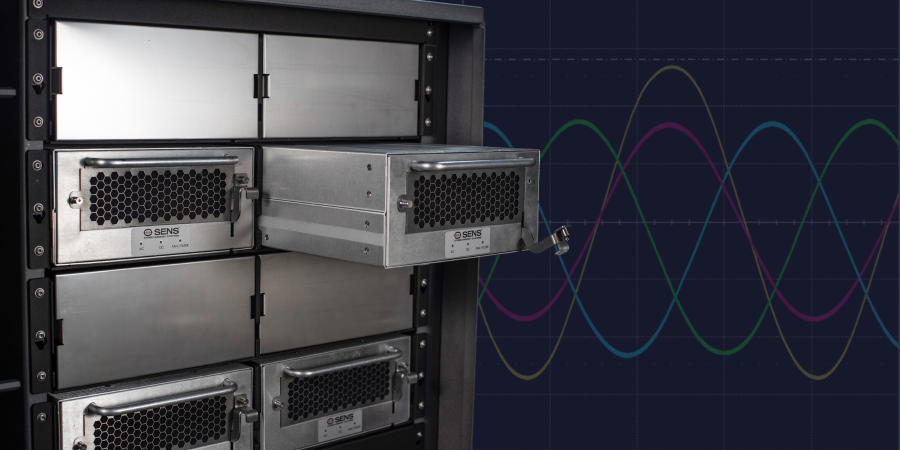
Many competitors still use IGBT products, but ours are based on silicon carbide (SiC). This technology allows for higher switching frequencies, which lets us shrink the size of the magnetics and filtered components. The result is cleaner, more robust DC power in a significantly smaller and lighter footprint. Our EnerGenius® DC modules are at the heart of the PowerCab2, producing up to 7 kilowatts of clean power each, and are fully hot-pluggable and expandable.
Q: What about AC input flexibility? Are users limited to three-phase power?
We’ve expanded those options significantly. While three-phase is standard for high-power builds, we’ve introduced single-phase rectifiers optimized for 120V, 240V, or 277V AC. This allows us to accommodate lower-voltage single-phase applications without needing a full infrastructure overhaul at the substation.
Q: The PowerCab2 is known for battery flexibility. When should an engineer look at Sodium Nickel Chloride (Salt) batteries instead of VRLA?
Salt batteries, like those from Horien, are fantastic for high-energy applications where the discharge rate is suited for substation switchgear - typically around six hours. The technical advantage is massive: they can operate in ambient temperatures from -20°C to +60°C. Because of this ruggedness, you can run an outdoor PowerCab2 system without the need for air conditioning or HVAC units. Plus, they can be stored at a construction site for a virtually indefinite period. If you let a VRLA battery sit for more than six months without a charge, you risk losing those batteries permanently.
Q: Safety is a major concern with high-energy DC systems. How does the PowerCab2 mitigate risks during installation?
The biggest safety risk in DC systems is lifting and handling 300 lb batteries. In the PowerCab2, batteries are factory-installed, wired, and secured, which removes that hazardous manual labor from the job site. We also use dead-front panels to keep all internal components touch-safe even when the doors are open. It prevents accidental contact with live terminals, which is a protection level most "build-your-own" systems simply lack.
Q: How does the system handle high-fault current protection?
We use 2-pole UL 489 listed load breakers rated at 14,000 AIC at 125V DC. This is substantially higher than other compact breakers on the market, giving engineers much better protection coordination for their DC distribution.
Q: Maintenance techs often ask about grounding. What is the standard configuration?
To meet UL 508A requirements, we ship units with the negative output grounded. However, we know field requirements vary. So if a project doesn't require UL 508A, that ground cable can be removed to create a floating ground or modified for a positive ground instead.
Q: What tools do you recommend for troubleshooting in the field?
There is no way around our SENS Setup Utility. It lets you capture snapshots, test alarms, and configure every charger setting from a laptop. For those running Salt batteries, the SMC Monitor application provides a deep look at battery health and alarm logs for advanced troubleshooting.
Q: Thank you for breaking it down for us, Richard!
We agree that building critical power piece by piece in the field is a liability. This is why our PowerCab2 provides a drop-in solution for facilities that need to bypass the risks of manual integration and ensure long-term reliability.
Our goal is to deliver a system that lets you focus on your facility’s total performance. You can stop worrying about whether the battery charger and the breakers were sized correctly to talk to each other. We handle the heavy lifting in the factory so your crew can focus on commissioning on-site.
Have a specific configuration question for your next project? Connect with our engineering team here.
Critical Power Insights, Delivered
Quarterly updates, technical guidance, and industry news