

 Bill Kaewert

WSJ's 'Five Ways to Disaster-Proof the Energy Grid' - are they right or wrong?
A WSJ article Five Ways to Disaster-Proof the Energy Grid (subscription required) on November 10, 2024, blames, with no supporting evidence, increasing frequency and duration of power outages in the United States on extreme weather events. We’ll get into that below.
The WSJ article identified five technologies to improve reliability. Tragically, four out of five of the Journal’s recommendations are fantastical thinking and, worse, fail to identify the real culprits behind declining power grid reliability.
First, what’s on the WSJ’s list, and what’s wrong with it?
AI modeling: AI’s role in grid management is overhyped. The primary cause of power shortages and failures is utility company failure to maintain an aging grid (e.g. century old powerline hardware caused California’s Paradise fire) and provide sufficient dispatchable resources. The grid is suffering from hardware integrity and capacity problems that can’t be fixed with software.
Transmission lines: Yes, better electrical conductors would marginally improve transmission capacity. The construction of all-new transmission lines to move power from where it’s generated to where it’s needed face massive barriers. The first is permitting and NIMBY. Transmission expansion is slowed by legal battles, land-use conflicts, and political inertia. Everyone everywhere always resists high voltage lines running through their backyard or favorite wilderness area. No breakthrough material solves that. The second problem is a shortage of high voltage transformers that are essential for every transmission project. According to the February 2025 issue of IEEE Spectrum, the wait for specialized large power transformers is four years and growing. Moreover, costs for these transformers have climbed 60 to 80 percent since 2020. According to IEEE, “a quarter of the world’s renewable energy projects may be delayed while awaiting transformers…” Without high voltage transformers, there’s no new transmission.
Demand management: This is a proven concept with a long history in energy markets. Widespread adoption, however, remains sluggish. Consumers push back against automated control over thermostats and EV chargers, and regulators struggle to implement real incentives. In the US demand management is via customers’ wallets. High electricity prices, however, turn electric power a luxury good for low- and fixed-income Americans. High costs are always a powerful indicator that supply is insufficient. We’ll discuss this more shortly.
Battery storage: Behind-the-meter storage is very practical for residential and industrial use. In theory, grid-scale batteries sound great too. Regardless of technology, though, grid scale batteries will never be cost-effective reservoirs of electrons. The scale and duration of storage to support the public grid is simply too vast. A much more practical and cost-effective solution is distributed (on-site) generation. Some experts estimate that the capital cost of on-site generated power is roughly 10% the cost of battery storage for equivalent power.
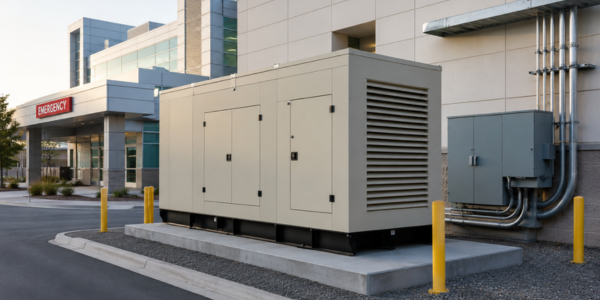
Microgrids: The Journal got this technology right. Instead of waiting for regulators and utilities to catch up, large energy consumers - hospitals, campuses, industrial sites – have taken control of their own power supply. Microgrids provide true resilience by generating power on-site and disconnecting from the grid when needed.
Now it’s time to discuss who are the real culprits causing more and longer power outages and rapidly escalating electricity prices.
The Foundation for Resilient Societies has estimated that most US coal-fired power plants, now delivering 17% of US electric power, will be retired by 2030. The plan for these plants’ replacement is mostly wind and solar. That’s a problem because renewables aren’t dispatchable. Unlike fossil plants, grid operators can’t command the wind to blow or the sun to shine. Meanwhile, data center growth, EV growth and the electrification of everything is causing electric demand to explode.
Regulators including FERC, NERC and public utility commissions appear to have their heads in the sand. Despite clear communication by generating operators about coal plant retirements, grid authorities like NERC continue to include such plants in future generating forecasts. One of the keynote presentations at the EGSA (Electrical Generating Systems Association) conference in April 2025 discussed this challenge in more detail.
Utility companies, instead of improving the situation, are often part of the problem. Regulated monopoly utility earnings grow in proportion to the utility’s asset base. More assets = more profits. Because it takes more renewable assets to generate the same number of megawatts as fossil plants, the utilities make a lot more money off renewables than they did in the past. Monopoly power utility companies are laughing all the way to the bank, at great ratepayer and taxpayer expense.
There is a cozy relationship between utility regulators and power utilities that serves these entities but harms the public. The relationship is reminiscent of that between the FAA and Boeing relationship, which facilitated the Boeing Company taking engineering shortcuts in 737 Max aircraft design. This ended up killing Boeing passengers and badly tarnishing the reputations of both Boeing and the FAA.
The electric power sector doesn’t need more AI hype, transmission wish lists, or storage fantasies. It needs decision-makers willing to push real solutions through regulatory and financial roadblocks and do what’s right for its customers, the ratepayers. It’s high time that regulators and electric power professionals acted like electric power is modern society’s most important life support system. Because it is.
Critical Power Insights, Delivered
Quarterly updates, technical guidance, and industry news