CASE STUDY | OCTOBER 2025
SuperTorque® 8Z Engine Starting System Delivers Reliability For Girtz Industries in Extreme Testing Conditions

-
Industry: Manufacturing & Testing
-
Solution: SuperTorque® 8Z
How Girtz Industries Improved Their Engine Starting Tests
-
The 8Z with integrated charger replaces 4 8D batteries at ¼ of the weight.
-
They can now move the battery around with a small cart instead of a forklift, and save 2 hours per test due to ease of use.
-
Each 8Z system sees about 20 starts per day - 40 times normal use - both indoors and outdoors.
-
The first 8Z lasted six times as long as a string of 8D batteries, resulting in over 80% cost savings.
Background
When you’re firing up gensets as many as 80 times a week, you want to be sure your starting system is a reliable workhorse, resilient to heavy use over time.
For Girtz Industries, a pioneering designer and manufacturer of power modules and packaged industrial systems, this kind of demanding use is all in a day’s work. A leader in turnkey power packaging solutions, Girtz rigorously tests its solutions, ensuring each custom-built, state-of-the-art design is ready to go the minute it’s installed.
In the company’s production stage, starting batteries are used intensively, each one seeing around 40 times typical real-world use. The facility tests 10 engines per day and start each one a minimum of two times per test. Batteries are moved between test cells and used both indoors and outdoors, in all kinds of Indiana weather.
Girtz works with a variety of engines, but all of them are big. The company needs to be sure its starting systems will fire up engines as large as 120L every time. For Girtz, starting up engines is central to operations. The reliability and ease of use of their starting system directly impact productivity and workflow.
Harsh Environment Pushes Starting Systems To The Limit
Girtz’s existing setup was heavy, awkward, and difficult to maneuver. To achieve the cranking amp they needed in test cells, Girtz used heavy steel carts, each carrying four 8D batteries, together with 10-amp SENS NRG chargers. It took a forklift to shift the carts.
With hard-to-start prototype engines, the process was even more time-consuming. Employees used forklifts to position several battery carts, stringing multiple batteries together to get adequate cranking amp endurance.
Traditional lead-acid AC or 8D batteries struggled to keep pace with this intense workload, and Girtz was constantly having to replace them. The batteries were also sensitive to the real-world ambient conditions of the outdoor cells, where temperatures range between 100°F in the summer and -10°F in the winter. The batteries often failed in colder weather and when the charge dropped too low. If someone forgot to plug them in, the testing schedule suffered delays and setbacks.
The company needed a new starting system that was reliable, more efficient, and easier for employees to use.
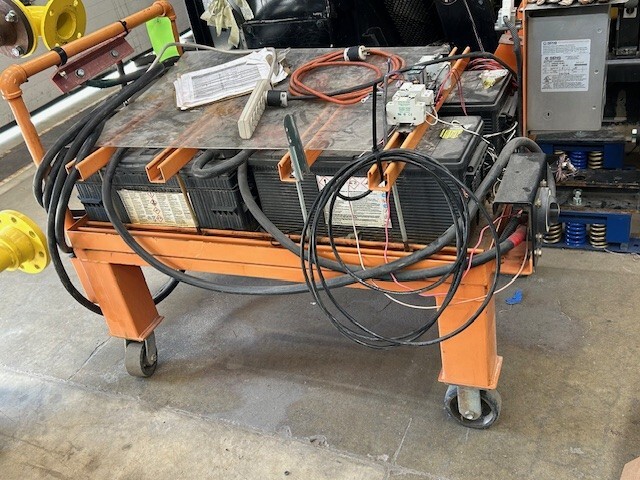
Girtz’s setup before

The battery use in our production cell is 40x the use a normal battery would see in the field. The production 8Z saw about 80 starts per week. A normal genset standby application would start maybe twice per week.
- Girtz Project Management Team

Solution
A Starting System That Can Handle 80 Starts a Week
Girtz brought in two SENS SuperTorque 8Z genset starting systems. One was dedicated to the production area, while a second moved between the test cells. To start engines over 60L, the two 8Zs are paired together. With any genset, you need to know it will start when you need it the most, making reliability critical to any starting system. Andthis is an outstanding feature of the 8Z.
Instead of a traditional lead-acid battery, which is liable to sudden and unexpected failure, the 8Z uses a long-lasting, stable high-performance battery. This was invaluable in the Girtz’s production cell, where the 8Z regularly made up to 80 starts a week, month in, month out.
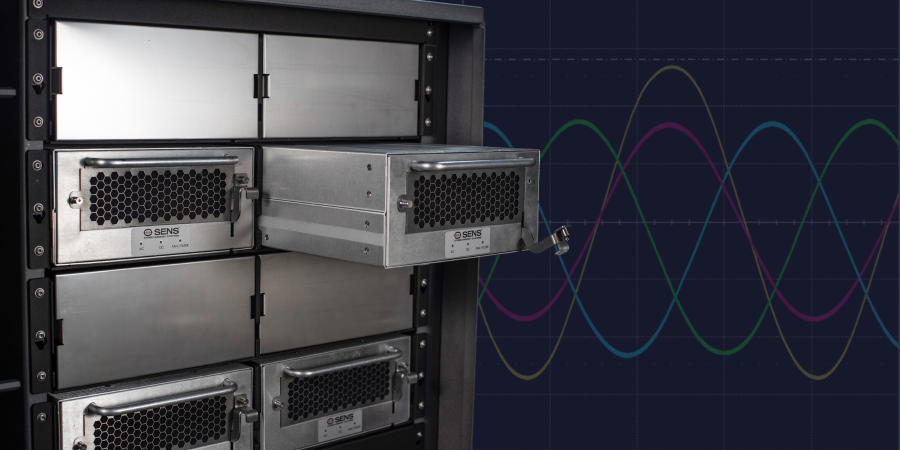
The 8Z’s compact, lightweight design makes it highly portable. With an integrated charger and at a quarter of the size and weight of its previous setup, Girtz put it on a portable, wheeled cart that two employees could easily move between test cells – without needing a forklift.
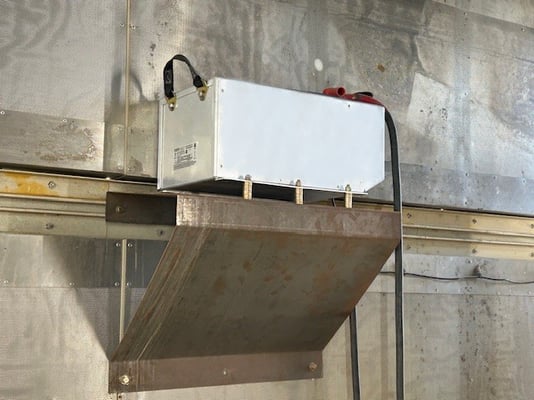
SuperTorque® 8Z
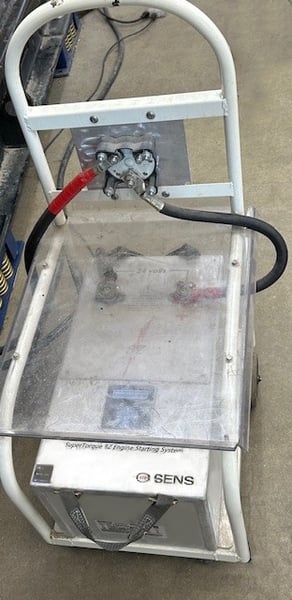
SuperTorque® 8Z
Reliability And Cost Savings – Month After Month
The SENS 8Z is delivering the reliability Girtz needs – even in its demanding testing environment. And the improvement is dramatic.
Previously, Girtz was going through four lead-acid 8D batteries every four months. Yet despite the brutally intense usage - cranking 40 times as often as a normal engine starting system would. The first 8Z used in their production cell environment lasted over two years. With an application failure risk that low, the cost savings are substantial.
The 8Z is incredibly resilient in the outdoor test cell environment. Where the lead-acid batteries often failed when the temperature dropped, one 8Z was left outside for a year in all conditions. It maintained its reliability and kept going even when people forgot to plug it in.
The other big saving for Girtz is time. The 8Z shaves two hours off every test due to its ease of use. With Girtz averaging eight tests every day, the new system saves the company considerable time and streamlines workflows. Its compact size delivers portability, while still packing the power Girtz needs to start reluctant prototype engines. Instead of stringing banks of batteries together, pairing just two 8Zs delivers enough cranking amp endurance. Engineering Manager, Brent Beissler said,
“The 8Z battery chemistry is much more power dense than traditional lead acid. It’s eye opening that you can get that many cranking amps from such a small footprint”
And the verdict from employees? They love the 8Z. It’s easier to handle than the previous cumbersome battery cars and gives them a tidier, safer working environment. But it’s not just their employees. Customers can view their tests more clearly in the neater test cells, and they like the faster speed of deployment and improved turnaround time too. In fact, some clients have been asking about using the 8Z for their own in-house applications.
The 8Z is delivering the reliable and resilient starting that Girtz needs - even with the extreme demands of production and test cells. Its portability and ease of use have streamlined workflows, saved labor hours, and boosted efficiencies. It’s a starting system that Girtz management, employees, and customers all appreciate using.
10-Year Girtz 3516 Test Lab TCO
The table below highlights the long-term cost advantage of the fully integrated SuperTorque® 8Z system in Girtz’s extreme testing environment. With significantly longer service life, maintenance-free operation, and no electrolyte checks or top-ups required, the 8Z helps reduce both operating costs and maintenance burden over the life of the system.
|
SuperTorque 8Z |
Lead-acid System |
|
|
Components |
Single 8Z |
4 4 Lead-Acid 8D batteries, DC disconnects, 2 battery racks, battery cabling and conduit |
|
Initial Costs |
$8,500 |
$3,319 |
|
Replacement Battery Cost - Month 4 |
$0 |
$1,450 |
|
Replacement Battery Cost - Month 8 |
$0 |
$1,450 |
|
Replacement Battery Cost - Month 12 |
$0 |
$1,450 |
|
Replacement Battery Cost - Years 2-9 |
$0 |
$39,150 |
|
10-yr Cost to Own |
$8,500 |
$46,819 |
|
8Z Advantage |
$38,319 |
81.8% |
Assumptions (For use in extreme testing conditions):
-
Lead-acid batteries modeled at $275 each
-
Battery replacement of 4 new batteries every 4 months requiring 2 hours of labor per battery replacement (6hrs/yr)
-
Battery replacement labor charge of $125/hr
-
No lead-acid battery maintenance costs as the battery reaches its end-of-life under extreme usage prior to maintenance needs
Critical Power Insights, Delivered
Quarterly updates, technical guidance, and industry news