2 min read
SENS Summit Explores How AI Is Reshaping Mission-Critical Power Design
 SENS
:
Jul 7, 2026
SENS
:
Jul 7, 2026
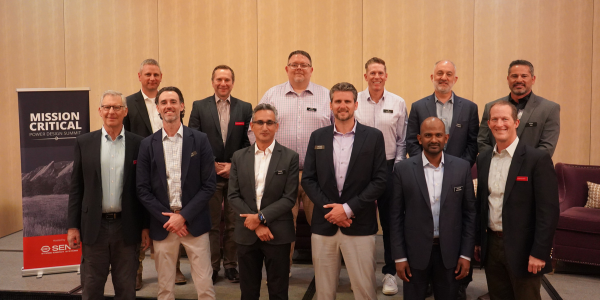
SENS convenes experts at the Mission Critical Power Design Summit to explore AI-driven demand, changing design requirements, and the need for system-level reliability
LONGMONT, CO — July 7, 2026 — Stored Energy Systems (SENS), an industry leader in critical DC power systems, brought together data center, engineering, power generation, and infrastructure leaders for its Mission Critical Power Design Summit, a focused, premier industry event to examine how AI growth is reshaping the requirements for mission-critical power design.
Across the keynote session, technical panels, and peer discussions, a clear message emerged: data center power infrastructure is entering a new era. Demand is accelerating, power availability is a gating constraint, requirements are shifting faster than design cycles, and reliability can no longer be addressed one component at a time.
“Mission-critical power design has always required discipline, but the AI buildout changes the scale, speed and complexity of the problem,” said Igor Stamenkovic, CEO of SENS. “We hosted this summit because the industry needs more direct conversation between the people designing, building, operating and supplying these systems. No single company has the full answer, but bringing the right experts together helps the entire industry move faster and make better decisions.”
AI demand creates headwinds and tailwinds for infrastructure growth
In the summit keynote, Lynn Smullen, president at EdgeConneX, framed the market opportunity and constraints shaping it. Her presentation pointed to a $7.5 trillion forecast for AI infrastructure investment through 2030, with the top four hyperscalers (Amazon, Google, Meta, and Microsoft) spending hundreds of billions in capital expense.
Through Smullen’s presentation, attendees heard how AI infrastructure demand is not slowing down, but the constraints have shifted. While capital is still flowing into the market, power availability, delivery timelines, and community acceptance now significantly influence what gets built.
Designing for the future means defining the right guardrails
Several discussions focused on the challenge of designing facilities today for technology that may change before those facilities are commissioned. AI rack density, cooling architecture, load behavior, power distribution and customer requirements are all evolving quickly.
Before teams can make technical decisions, they need to understand who a facility will serve, what load profile it must support, what reliability level is required, what equipment constraints exist, and how much flexibility the design must preserve for future power and cooling changes.
Ken Kutsmeda, Global Technology Leader for Jacobs’ Data Center practice, emphasized that documentation, responsiveness, and end-to-end sequence-of-operations testing are critical to ensure problems do not emerge when components operate as a system.
“The question is no longer just whether a component meets its specification,” said Kutsmeda. “The question is whether the whole system can perform through the actual sequence of operations — including the handoffs, the load steps, the recovery process and the conditions the facility will face once it is operating.”
More from Kutsmeda: Data centers and digital infrastructure | Jacobs
Reliability now depends on system-level thinking
The summit’s technical sessions reinforced that power continuity failures rarely come from an isolated component. Instead, failures often emerge from the interaction between systems: electrical distribution, batteries, controls, generators, cooling, communications networks, recovery sequences, and field commissioning practices.
Michael Sanford, EGSA Board Member added a regulatory lens to this challenge, noting that demand-response requirements need system architectures that can respond as a unified power system.
“As these facilities become larger and more grid-interactive, power continuity has to be designed at the architecture level,” said Sanford. “The system must respond to the regulatory requirement, the utility condition and the customer SLA at the same time.”
For SENS, that systems-level view aligns with its focus on factory-packaged, tested and integrated DC power systems for mission-critical environments.
“Reliability is not just a product attribute. It is an engineering approach,” said Stamenkovic. “The future of mission-critical power will belong to teams that understand the full system: how it is specified, how it is built, how it is tested and how it behaves when something goes wrong.”
More from Sanford: About Integra | Mission-Critical Data Center Experts
About SENS
Stored Energy Systems (SENS) delivers integrated DC power and engine-starting systems for mission-critical applications. For more than 50 years, SENS has reduced operational risk through reliable power systems, helping customers simplify infrastructure and protect uptime.
Critical Power Insights, Delivered
Quarterly updates, technical guidance, and industry news